


A Dual-System Architecture Built for Flexible, Parallel Production Workflows
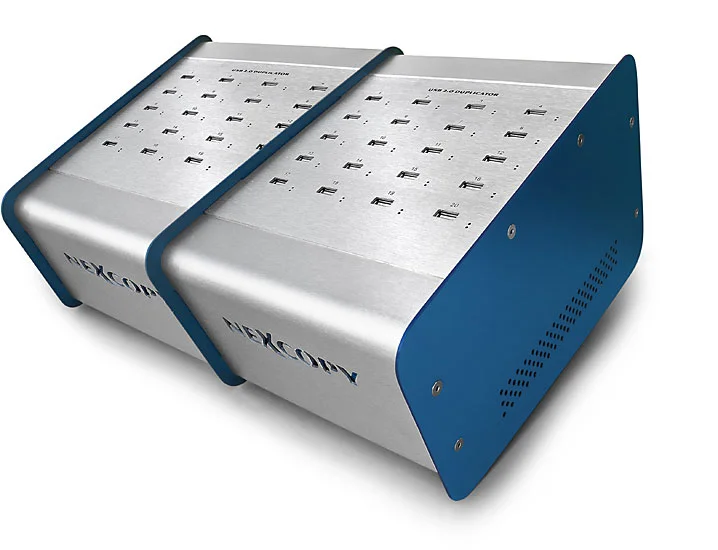
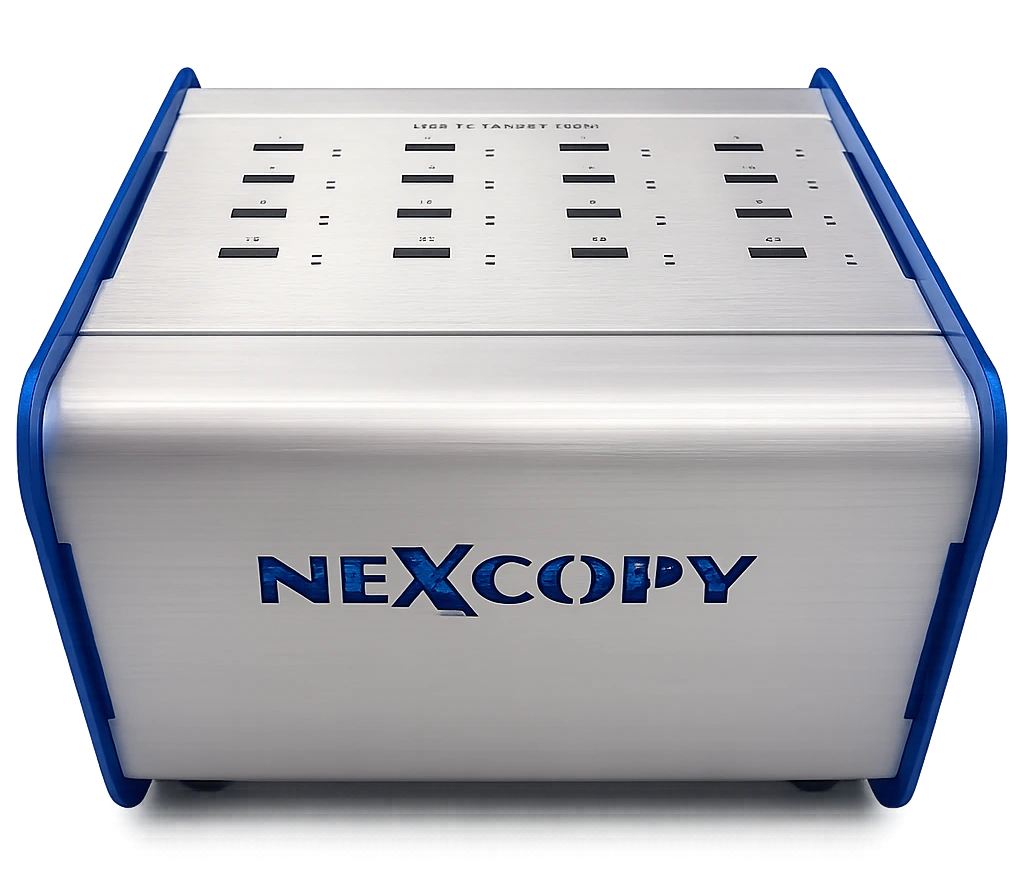
The USB400PC is a professional USB duplication platform designed around a modular two-unit architecture rather than a single monolithic system. It is delivered as two coordinated 20-target duplicator units that can operate together as a 40-target system or independently as two separate 20-target systems.
This design reflects how many real production environments actually operate. Teams often need to run multiple projects with different data sets at the same time, split work between operators, or maintain output while one system is temporarily unavailable.
Instead of forcing all production through one large workflow, the USB400PC provides structural flexibility while still delivering professional duplication accuracy and verification.
When the USB400PC Is the Right Choice
The USB400PC is selected when organizations need more capacity than a single 20-target system but want to preserve operational flexibility rather than committing to a single large production queue.
It is commonly used in environments where two separate jobs must run concurrently, where different departments share production responsibility, or where workload must be distributed across operators without disrupting ongoing tasks.
Teams that value adaptability often choose the USB400PC because it supports both centralized output and decentralized operation using the same hardware investment.
Why the USB400PC Uses a PC-Based Architecture
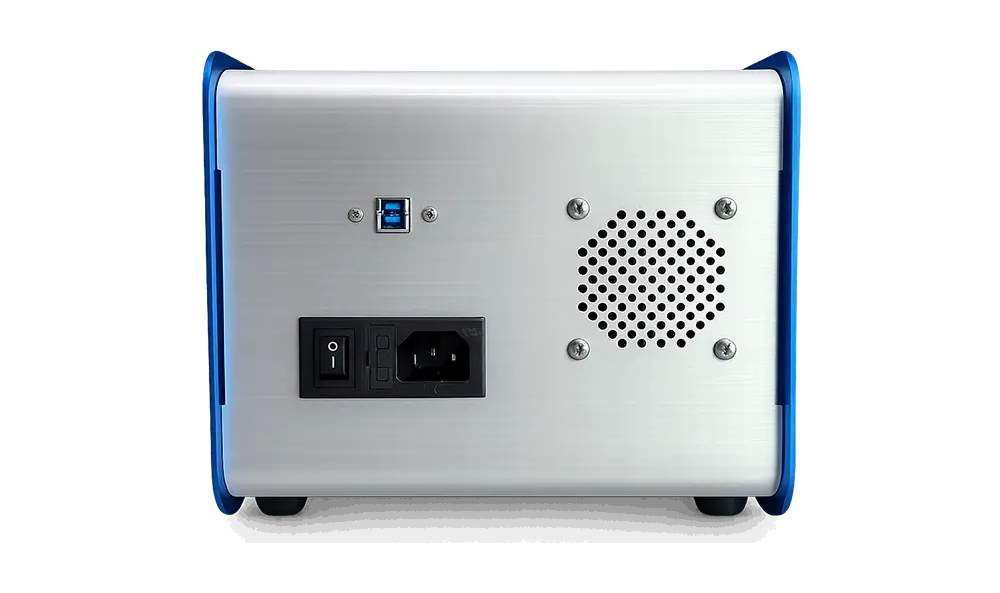
The USB400PC uses a PC-connected workflow to provide visibility, job configuration, and verification during production. Each 20-target unit connects to a Windows workstation and is managed through Nexcopy software rather than relying on blind push-button execution.
This architecture allows operators to configure jobs precisely, monitor progress in real time, and validate results through logging and verification features that are not available on basic standalone duplicators.
Because the system already operates within a full software environment, it also preserves the option to transition into advanced controller-level functionality in the future without replacing the underlying hardware.
Production Duplication Without Controller Modification
The USB400PC performs duplication at the file system and device level without altering USB controller behavior. Data is written accurately and verified, while devices remain standard, writable USB flash drives after production.
This approach supports workflows where media must remain reusable, editable, and broadly compatible after distribution while still providing confidence that production output matches the intended source.
Upgradeable to PRO Software
Each 20-target unit within the USB400PC can be upgraded remotely to the PRO software tier when requirements change. This software-only upgrade unlocks controller-level features such as hardware-enforced write protection, CD-ROM emulation, partition configuration, and descriptor control without requiring new hardware.
Because PRO-level configuration requires direct drive-letter access to issue vendor-specific commands, each upgraded unit operates as its own 20-target PRO system and requires its own Windows workstation. When upgraded, the USB400PC becomes two independent PRO systems rather than a single 40-target PRO system, while preserving the original hardware investment.
Copy Methods and Production Workflows
The USB400PC supports six copy methods, allowing teams to select the most appropriate workflow for each project rather than forcing all production into a single duplication model.
Six Copy Methods Supported
- File Copy – copy files and folders only
- Full Device Copy – bit-for-bit duplication
- Smart Device Copy – intelligent copy excluding empty sectors
- IMG Copy – write from pre-built image file
- Copy Add – append files to existing content
- Unique Data Streaming – individualized data per device
Unique Data Streaming for Individualized USB Content
Unique Data Streaming allows different data to be written to each USB device during a single job. This is commonly used for serial numbers, license files, certificates, identifiers, or configuration assets tied to each device.
The feature is designed to integrate with existing production pipelines rather than enforce a rigid structure, allowing teams to automate data preparation while retaining control over how content maps to each device.
USB Data Extraction to Host Storage
The USB400PC also supports read-back workflows, allowing data to be extracted from connected USB devices and saved to host storage. This is useful for inspection, validation, collection, and archival scenarios.
Extracted data can be consolidated into a single destination or automatically organized by source device, with optional post-processing actions such as secure erase or formatting to support controlled reuse.
Flexible Capacity Architecture
- Standard configuration provides 40 total targets across two 20-target units
- Units can operate together as one 40-target system
- Units can operate independently as two separate 20-target systems
- Supports parallel workflows with different data sets
- Each unit can be upgraded independently to PRO software
Who This Product Is For
- Organizations managing multiple concurrent duplication jobs
- Production teams requiring higher throughput with operational flexibility
- IT departments staging different data sets simultaneously
- Manufacturers distributing workloads across parallel workflows
- Teams that want scalability without committing to PRO features upfront
Key Specifications
- 40-target USB duplication system (two 20-target units)
- USB 2.0 architecture
- Windows-based production workflow
- Upgradeable to PRO software on a per-unit basis
- CE, FCC, and RoHS certified
- For full engineering specifications and system characteristics, view the USB400PC Technical Datasheet
For an overview of Nexcopy’s current USB duplication platforms, visit our USB duplicator solutions page.
Guidance for Parallel USB Duplication Workflows
Organizations evaluating mid- to high-capacity USB duplication systems often need clarity on workflow structure, system scaling, and how dual-unit platforms fit into existing production environments. Nexcopy provides technical guidance on USB400PC deployment, system configuration, upgrade paths, and operational best practices for professional production teams.