


Disc License USB Flash Drive: CD-ROM Emulation for Permanent Read-Only Distribution
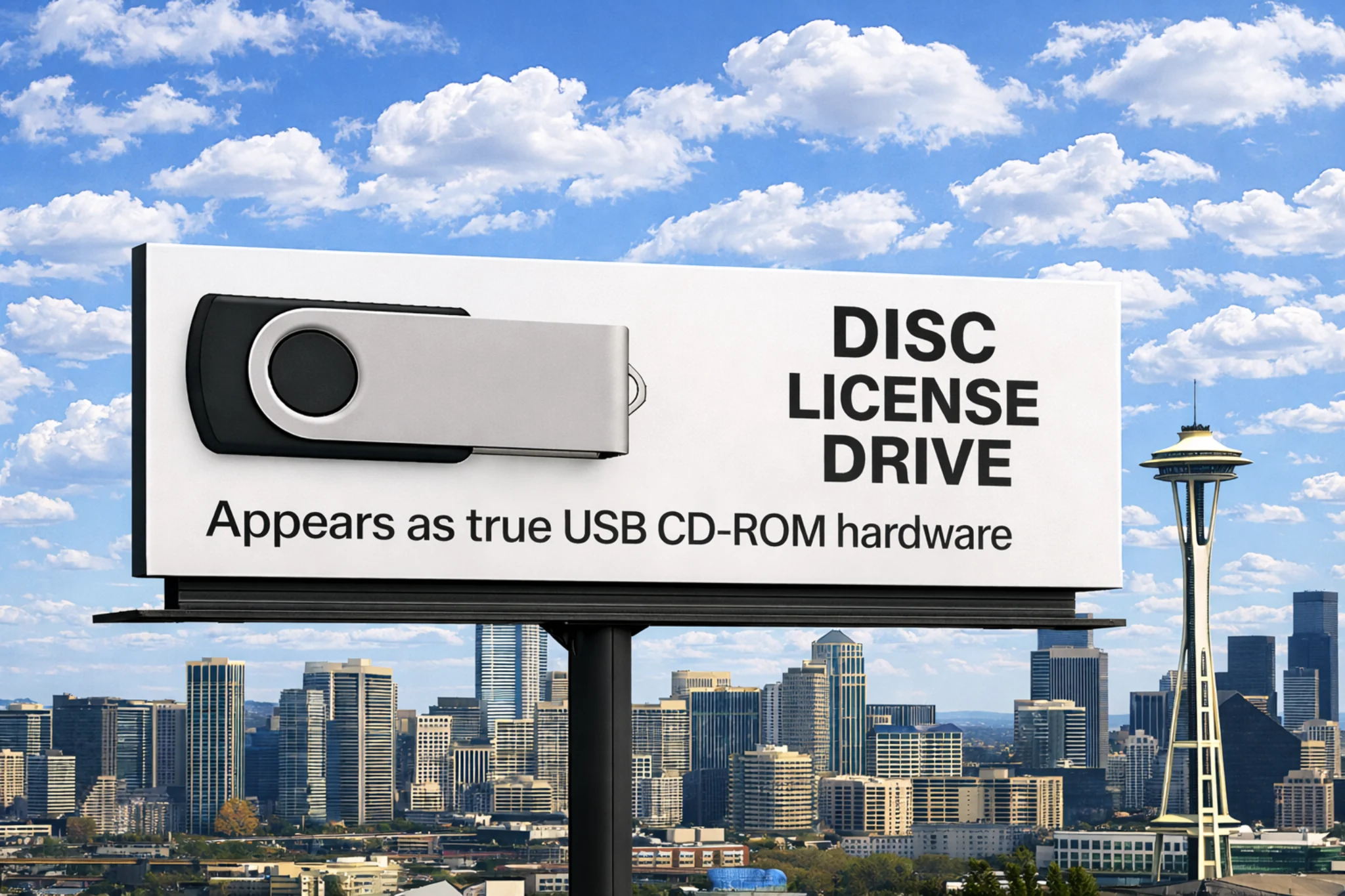
Disc License is Nexcopy’s controller-configured USB flash drive that enumerates as a CD-ROM device when connected to a computer. Rather than mounting as removable storage, the device appears as an optical drive, creating a permanently read-only delivery format for files, installers, and digital media.
The CD-ROM configuration is applied directly at the USB controller level. Contents cannot be deleted, formatted, altered, or infected because the device does not expose writable storage to the operating system. This makes Disc License a reliable replacement for legacy CD and DVD distribution.
Disc License is not a universal software solution that can be applied to any flash drive. The CD-ROM behavior requires Nexcopy’s dedicated hardware platform, where the device descriptor and controller configuration enforce the optical-drive identity.
How Disc License Works
Disc License devices are configured so the USB controller presents the drive as an optical (CD-ROM) device rather than as mass storage. When connected, the operating system detects the device as a CD/DVD drive, which by definition is read-only.
Content is loaded by writing an ISO image file to the device using Nexcopy’s free Drive Wizard software. The ISO can be replaced at any time by re-writing the device, allowing organizations to reuse the same media for updated distributions.
Key Features
- CD-ROM emulation: Device mounts as an optical drive instead of removable storage.
- Controller-level enforcement: Configuration is applied in hardware and cannot be bypassed.
- Always read-only: Files cannot be deleted, modified, formatted, or infected.
- ISO-based content loading: Any ISO (9660 / UDF hybrid) image can be written to the device.
- Cross-platform compatibility: Appears as optical media on Windows, macOS, and Linux.
- Rewritable deployment: New ISO files can be loaded at any time using Drive Wizard.
- USB versions: Available in USB 2.0 and USB 3.0.
- Capacities: Capacities start at 2GB.
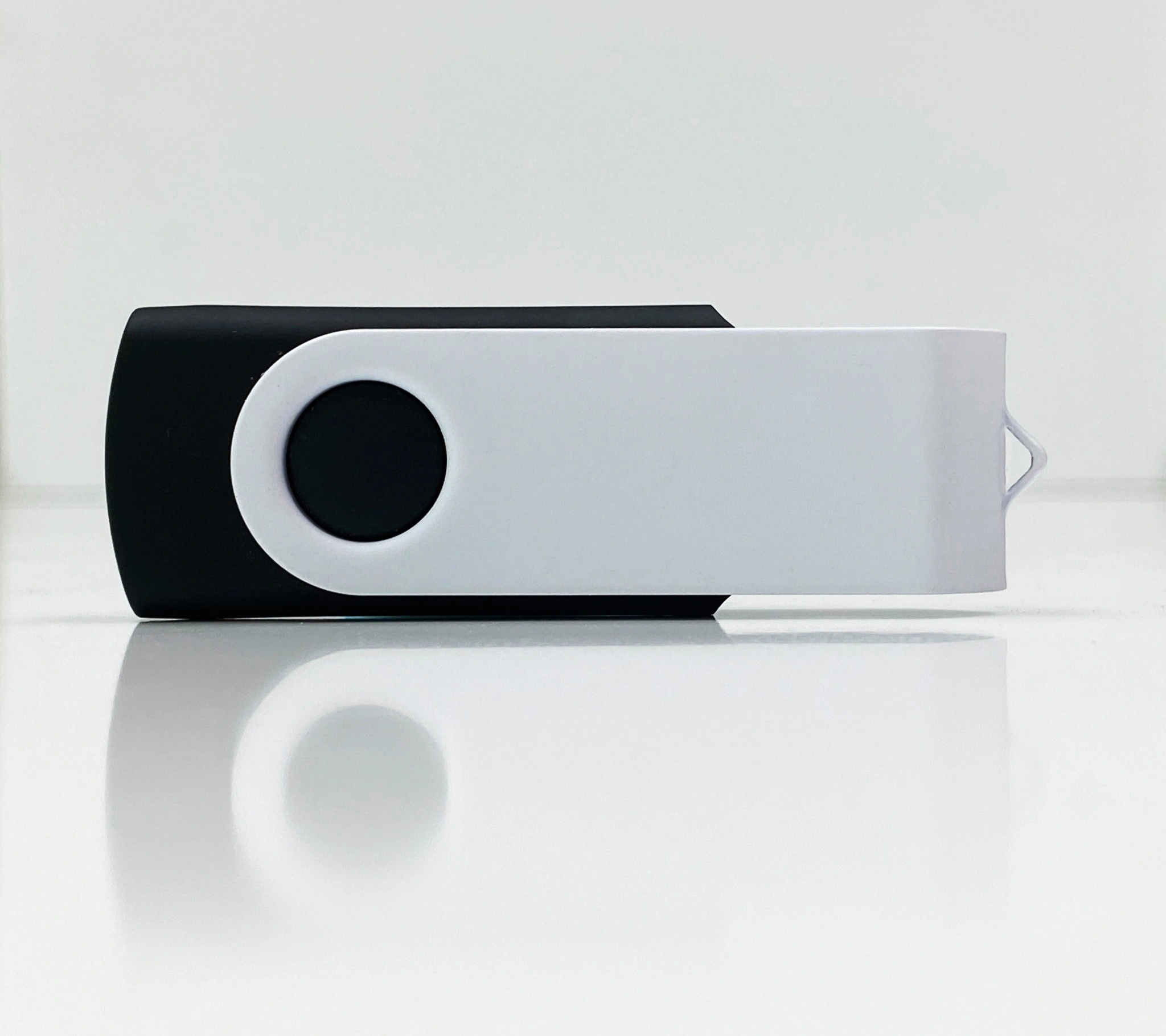
- Drive styles: Multiple body styles and colors supported.
- Branding: Custom printing and branding available.
- Minimum order: 20 units.
Why Disc License Matters
Many organizations use USB drives to distribute software, documentation, training materials, and digital media. The problem is that most USB-based solutions only appear to be read-only. Tools such as bootable USB creators or ISO-writing utilities can make a flash drive look like a CD-ROM, but the underlying device is still writable and can still be formatted, erased, or modified.
This distinction matters. A USB drive that can be reformatted is not truly read-only. The original content can be removed, replaced, or infected with malware, even if it initially mounted as an optical-style volume.
Disc License solves this by enforcing CD-ROM behavior at the controller level. The device itself identifies as optical media, which means the operating system never exposes writable storage. The recipient can access the content, but cannot delete it, overwrite it, format the device, or alter its behavior.
This provides a modern replacement for CD and DVD distribution while preserving the same immutable, tamper-resistant behavior organizations historically relied on for secure delivery.
Common Use Cases
Disc License is commonly used for distributing software installers, product catalogs, training materials, technical documentation, compliance documentation, and digital media where recipients must not be able to modify the original content.
It is frequently deployed by software vendors, manufacturers, education providers, medical device companies, marketing teams, and enterprises seeking a secure, professional alternative to legacy CD/DVD delivery.
Why Disc License Instead of Standard USB Drives
- True optical behavior: Because Disc License enumerates as a real CD-ROM device, modern versions of Windows will trigger the standard AutoPlay prompt (as they do with CDs and DVDs), without relying on insecure or deprecated USB autorun tricks.
- Standard USB drives: Files can be deleted, altered, reformatted, or infected once the device is mounted.
- Software write-protection: Relies on host OS configuration and user behavior, and can often be bypassed.
- Password-protected files: Still mount as writable storage and remain vulnerable to formatting or manipulation.
- Disc License: Hardware-enforced CD-ROM behavior prevents modification entirely because no writable storage is ever exposed to the operating system.
Because Disc License presents itself as optical media, the protection does not depend on the operating system, user configuration, or external software. The enforcement is built into the device itself.
Management & Integration
Content is managed using Nexcopy’s free Drive Wizard software, which allows ISO images to be written to Disc License devices from any Windows (10+) system.
Organizations can standardize deployments using consistent Nexcopy manufacturing, ensuring identical device behavior across production batches for large-scale distribution projects.
Branding, body style selection, and production configuration can be incorporated for organizations running ongoing fulfillment, marketing, or compliance distribution programs.
Video Overview
Disc License Overview
Built on Nexcopy’s Professional USB Media Platform
Copy Secure USB drives are built on the same professional-grade hardware platform as all Nexcopy licensed products. This includes controlled manufacturing, traceability, and consistent behavior across production batches.
View USB Flash Media Technical Datasheet
The underlying media platform includes defined bill of materials (BOM), qualified controller selection, and validated manufacturing consistency to ensure predictable behavior across deployments.
Questions About Disc License USB Media?
Organizations evaluating Disc License USB drives for permanent read-only distribution, software delivery, or controlled content deployment can request additional technical details before purchase. Nexcopy supports qualification reviews, proof-of-concept testing, and procurement workflows for enterprise, institutional, healthcare, and government environments.