





Professional microSD card duplication systems designed for accuracy, consistency, and scalable production.
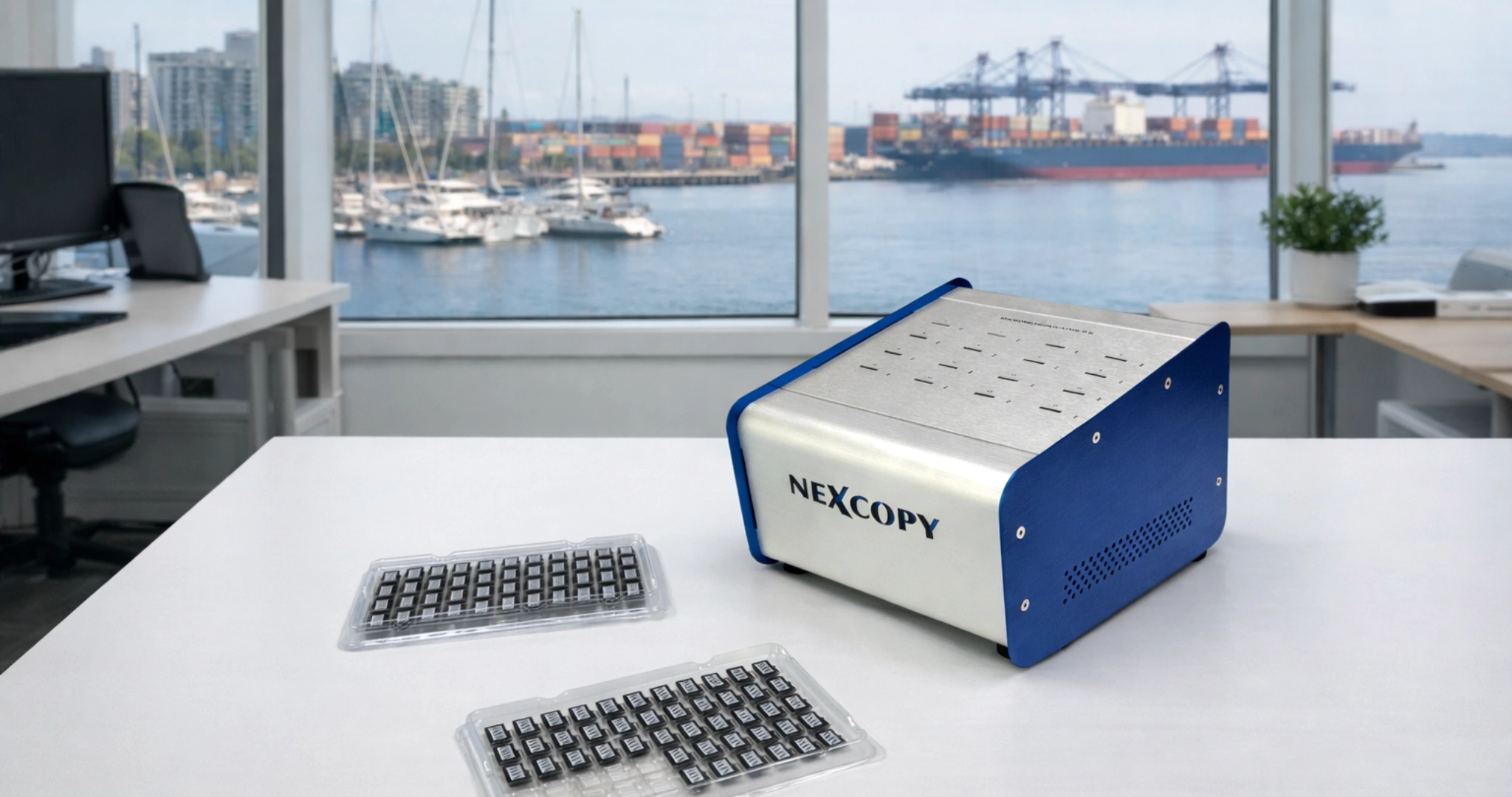
Nexcopy microSD card duplicators are built for organizations that require reliable, repeatable duplication of microSD media without relying on operating system file copy behavior. These systems write data directly to flash memory using controlled hardware workflows.
Nexcopy offers both advanced PC-based systemsPC-based systems: Refers to systems or devices that require a personal computer to operate or manage their functions.View tech reference for detailed job configuration and reporting as well as high-speed standalone duplicatorsstandalone duplicators: Hardware devices that duplicate data to multiple storage media without requiring a host computer.View tech reference designed for high-volume production efficiency.
What is a microSD card duplicator?
A microSD card duplicator writes data directly to microSD media at the hardware level, bypassing standard operating system copy processes. This method ensures predictable behavior, consistent performance, and identical results across large batches of cards.
These systems are essential for manufacturing, device provisioning, and regulated environments like automotive, embedded systems, and handheld mapping platforms where interchangeability and validation are critical.
The microSD Card Feature Comparison
| Detailed Feature Set | mSD160PC | mSD115SA | mSD131SA |
|---|---|---|---|
| System Architecture | |||
| Number of Targets | 16 | 15 | 31 |
| Standalone Operation | — | ✓ | ✓ |
| PC Operation | ✓ | — | — |
| Copy Modes & Controller Functions | |||
| File Copy / Copy Add | ✓ | — | — |
| Device Copy | ✓ | ✓ | ✓ |
| Unique Data Stream / Write from IMG File | ✓ | — | — |
| Read/Program CID Values | ✓* | — | — |
| Controller-Level Write Protection | ✓* | — | — |
Current microSD Card Duplicator Models
These models represent Nexcopy’s current-generation microSD duplication platforms, designed for modern production and deployment requirements:
- microSD Card Duplicator – mSD160PC
16-target PC-based system featuring CID reading/programming and controller-level data locking. - microSD Card Duplicator – mSD115SA
15-target standalone system optimized for high-speed industrial imaging and PC-free operation. - microSD Card Duplicator – mSD131SA
High-capacity 31-target standalone duplicator designed for scalable, volume-driven production.
*Programming CID valuesProgramming CID values: Unique metadata stored on microSD cards used for identification, validation, and traceability in production workflows.View tech reference and controller-level write protection requires Nexcopy-qualified media for validation. Reading CID values can be performed on any standard microSD card.
Frequently Asked Questions
What is the difference between a PC-based and a standalone microSD duplicator?
PC-based duplicators (like the mSD160PC) interface with a computer to allow complex operations like unique data streaming, extensive data logs, and CID customization. Standalone units (like the mSD115SA) operate completely independently via an internal processor, making them ideal for high-speed, plug-and-play binary imaging without requiring a host computer.
Can all microSD cards have their CID numbers programmed or modified?
No. Standard retail microSD cards have locked Card Identification (CID) registers at the factory. Nexcopy hardware can read the CID numbers of any standard card for validation purposes, but writing or programming custom CID values requires specialized, vendor-approved programmable microSD media.
How does controller-level write protection work on a microSD card?
Controller-level write protection configures the internal flash memory controller of the microSD card to lock the data permanently at the hardware level. This ensures the card behaves as a read-only device, preventing end-users from deleting or modifying files. This feature requires specific device controllers within the memory card.
What is the difference between File Copy and Device Copy on these systems?
File Copy transfers individual data files and allows adding content to an already populated card. Device Copy is a sector-by-sector binary master copy that duplicates everything—including partition structures, file systems, boot sectors, and unallocated space—making it mandatory for proprietary operating systems or Linux builds.
Why should I use a dedicated hardware duplicator instead of a standard USB hub?
Standard operating systems copy files sequentially, which creates significant slowdowns, drive dropping, and data corruption when writing to multiple slots simultaneously via a USB hub. Dedicated duplicators copy data synchronously across physical hardware lanes, guaranteeing identical speeds across all targets and automated hardware-level verification checks.
What is the maximum copy capacity for Nexcopy standalone microSD duplicators?
For high-capacity manufacturing runs, Nexcopy offers standalone units like the mSD131SA, which features 31 target slots. It scales your production capacity without relying on any external software or incurring any performance loss when running all targets concurrently.
Are Nexcopy microSD duplication systems in stock and ready to ship?
Yes, current-generation systems, including the PC-based mSD160PC and standalone mSD115SA and mSD131SA units, are actively in stock. All systems are manufactured with premium industrial-grade sheet metal enclosures built for 24/7 continuous production workloads.
Get the Right microSD Card Duplicator for Any Project
Organizations evaluating microSD card duplication systems for production imaging, device provisioning, or secure distribution can request technical guidance before deployment. Nexcopy supports workflow qualification, platform selection, and procurement planning to ensure your system aligns with your specific volume and verification needs.